Showing posts with label American Board of Pediatrics. Show all posts

Saturday, March 17, 2012

Good health programs that can make the world a healthier place - CARTER CENTER


Health Programs helped by the Carter Center: 

The Carter Center's health programs fill vacuums in global health, helping to prevent needless suffering and build hope for millions of the world's poorest people. 

Let us learn about one disease - GUINEA WORM
What is Guinea worm disease?Guinea worm disease, also known as dracunculiasis, is a parasitic infection caused by the nematode roundworm parasite Dracunculus medenisis.
How do you get Guinea worm disease?
Guinea worm disease is contracted when people ingest drinking water from stagnant sources containing copepods (commonly referred to as water fleas) that harbor infective Guinea worm larvae. Inside a human's abdomen, Guinea worm larvae mate and female worms mature and grow, some as long as 3 feet (1 meter). After a year of incubation, the female Guinea worm creates an agonizingly painful lesion on the skin and slowly emerges from the body. The contamination cycle begins when victims, seeking relief from the burning sensation caused by the emerging Guinea worm, immerse their limbs in sources of drinking water, which stimulates the emerging worm to release larvae into the water and begin the cycle all over again.
How is the disease treated and infection prevented?There is no known curative medicine or vaccine to prevent Guinea worm disease.

Traditional removal of a Guinea worm consists of winding the worm - up to 3 feet (1 meter) long - around a small stick and manually extracting it—a slow, painful process that often takes weeks. The skin lesions often develop secondary bacterial infections, which exacerbate the suffering and prolong the period of disability.

The best way to stop Guinea worm disease is to prevent people from entering sources of drinking water with an active infection and to educate households to always use cloth filters to sieve out tiny water fleas carrying infective larvae.

Educating communities about Guinea worm prevention is vital to stopping the spread of the disease.

Guinea worm disease is set to become the second human disease in history, after smallpox, to be eradicated. It will be the first parasitic disease to be eradicated and the first disease to be eradicated without the use of a vaccine or medical treatment.


What is the Carter Center's role in Guinea worm eradication?In 1986, The Carter Center began to provide technical and financial assistance to national Guinea worm eradication programs, beginning with Pakistan, and today it spearheads the international Guinea worm disease eradication campaign in close partnership with the Centers for Disease Control and Prevention, the World Health Organization, UNICEF, and many other partners.

In 2011, there were 1,060* cases reported in four African countries—South Sudan, Mali, Ethiopia, and Chad (outbreak).  (*Provisional.  Total includes an isolated outbreak in Chad and two cases reported by Ethiopia as imported from South Sudan.)
  ( DOWN from 3.5 million cases in 1986

http://www.allianceforthelostboys.com/assets/images/guinea%20worm%20life%20cycle..jpg


Check  this link to know more about Jimmy Carter's foundation  CARTER CENTER 

Friday, March 16, 2012

I do not need Prozac... But let me learn how Fluoxetine works!


Fluoxetine: Sold as Prozac, Sarafem, Fontex etc.

Image Courtesy: "Depressants ." Human Diseases & Conditions. N.p., 2011. Web. 16 Feb. 2011.

This is an antidepressant of the selective serotonin reuptake inhibitor (SSRI) class

Fluoxetine is approved for the treatment of 
Major depression (including pediatric depression),
Obsessive-compulsive disorder (in both adult and pediatric populations), 
Bulimia nervosa, 
Panic disorder and 
Premenstrual dysphoric disorder.

Fluoxetine's mechanism of action is primarily that of an SSRI. 

SSRIs are believed to increase the extracellular level of the neurotransmitter serotonin by inhibiting its reuptake into the presynaptic cell, increasing the level of serotonin in the synaptic cleft available to bind to the postsynaptic receptor.

The bioavailability of fluoxetine is relatively high (72%), and peak plasma concentrations are reached in 6 to 8 hours. 

Fluoxetine is metabolized in the liver by isoenzymes of the cytochrome P450 system, including CYP2D6. The role of GYP in the metabolism of fluoxetine may be clinically important, as there is great genetic variability in the function of this enzyme among people. Only one metabolite of fluoxetine, norfluoxetine (N-demethylated fluoxetine), is biologically active. Steady concentration in the blood is achieved only after four weeks The brain concentration of fluoxetine and its metabolites keeps increasing through at least the first five weeks of treatment. That means that the full benefits of the current dose a patient receives are not realized for at least a month since its initiation Likewise, complete excretion of the drug may take several weeks.


Video: Youtube

Tuesday, March 13, 2012

History of HbA1c and what does it do?

History:
Hemoglobin A1c was first separated from other forms of hemoglobin by Huisman and Meyering in 1958.  It was first characterized as a glycoprotein by Bookchin and Gallop in 1968. Its increase in diabetes was first described in 1969 by Samuel Rahbar The use of hemoglobin A1c for monitoring the degree of control of glucose metabolism in diabetic patients was proposed in 1976 by Anthony Cerami, Ronald Koenig and coworkers.
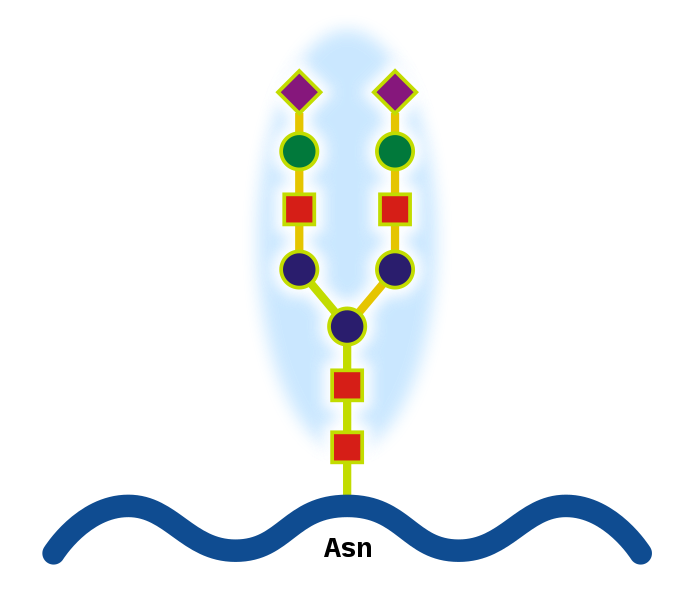
N-linked protein glycosylation (N-glycosylation of N-glycans) at Asn residues (Asn-x-Ser/Thr motifs) in glycoproteins.


What are Glycoproteins? 
They are proteins that contain oligosaccharide chains (glycans) covalently attached to polypeptide side-chains. The carbohydrate is attached to the protein in a cotranslational orposttranslational modification. This process is known as glycosylation. In proteins that have segments extending extracellularly, the extracellular segments are often glycosylated. Glycoproteins are often important integral membrane proteins, where they play a role in cell–cell interactions. Glycoproteins are also formed in the cytosol, but their functions and the pathways producing these modifications in this compartment are less well understood


Why do we measure HbA1c every 3 months?

In the normal 120-day lifespan of the red blood cell, glucose molecules react with hemoglobin, forming glycosolated hemoglobin. In individuals with poorly controlled diabetes, the quantities of these glycosolated hemoglobins are much higher than in healthy people.
Once a hemoglobin molecule is glycosolated, it remains that way. A buildup of glycosolated hemoglobin within the red cell, therefore, reflects the average level of glucose to which the cell has been exposed during its life-cycle. Measuring glycosolated hemoglobin assesses the effectiveness of therapy by monitoring long-term serum glucose regulation. The HbA1c level is proportional to average blood glucose concentration over the previous four weeks to three months. Some researchers state that the major proportion of its value is related to a rather shorter period of two to four weeks.
Image source: http://adiscar-adiscar.blogspot.com

We will talk about measuring HbA1c tomorrow

Monday, March 12, 2012

Tummy Tuck and Stretch Marks!

Medical Term for Strech Marks: Striae
Stretch marks or striae (singular stria), are a form of scarring on the skin with an off-color hue. They are caused by tearing of the dermis, which over time may diminish, but will not disappear completely.
Stretch marks are often the result of the rapid stretching of the skin associated with rapid growth.
Stretch marks can appear anywhere on the body, but are most likely to appear in places where larger amounts of fat are stored. Most common places are the abdomen, breasts, upper arms, underarms, back, thighs , hips, and buttocks. They pose no health risk in and of themselves.


In CUSHING SYNDROME, the glucocorticoid hormones responsible for the development of stretch marks affect the dermis by preventing the fibroblasts from forming collagen and elastin fibers, necessary to keep rapidly growing skin taut. This creates a lack of supportive material, as the skin is stretched and leads to dermal and epidermal tearing.
A new modality, fractional laser resurfacing, offers a novel approach to treating striae. Using scattered pulses of light only a fraction of the scar is zapped by the laser over the course of several treatments. This creates microscopic wounds. The body responds to each treatment by producing new collagen and epithelium


Picture courtesy: Derm Atlas


Abdominoplasty or "tummy tuck" is a cosmetic surgery procedure used to make the abdomen more firm. The surgery involves the removal of excess skin and fat from the middle and lower abdomen in order to tighten the muscle and fascia of the abdominal wall. 

Sunday, March 11, 2012

Epistaxes ( Nose bleeds) - Anterior Nose bleed

This is probably one of the scariest medical problem a parent or even an adult experiences and many a times it is innocuous.
Cause is local or generalized (systemic)
Broadly divided to Anterior and Posterior nose bleeds.
Today the discussion will be anterior nose bleeds


Nosebleeds begin in the lower part of the septum, (wall that separates the two nostrils ). The septum has tiny blood vessels that can break by nose blowing or nose picking. Nosebleeds coming from the front of the nose,  (anterior nosebleeds) often begin with blood out one nostril usually when sitting or standing.

Anterior nosebleeds are common during dry climates or during the winter when dry, heated indoor air dehydrates the nasal membrane. Dryness result in crusting, cracking, and finally bleeding. 
This bleeding can be prevented by placing a slight application of petroleum jelly or an antibiotic ointment on the end of a fingertip and then rubbing it inside the nose, especially on the septum.

ADVISE TO STOP BLEEDING
Stay calm, or help the child (or the adult) to calm down. Agitation makes bleeding more profuse.
Keep head higher than the level of the heart. Sit up.
Leaning slightly forward helps the blood not going into the throat
Gently blow any clotted blood out of the nose.  N
asal decongestant spray can help.
Using the thumb and index finger, pinch all the soft parts of the nose.  
Do not pack the inside of the nose with gauze or cotton.
Hold the position for five minutes. 
If bleeding persists, hold an additional 10 minutes.
Here is the first aid demo: from YOUTUBE
Surgical procedure for severe nose bleeding

Saturday, March 10, 2012

Respiratory Syncytial Virus - How to prevent my severity?


How can I help prevent the spread of RSV?

RSV is spread by coming in close contact with an infected person and the droplets produced when the person coughs or sneezes.  Careful hand washing with soap and warm water is the best way to prevent the spread of RSV. 

Palivizumab (brand name Synagis) is a monoclonal antibody produced by recombinant DNA technology. It is used in the prevention of respiratory syncytial virus (RSV) infections. It is recommended for infants that are high-risk because of prematurity or other medical problems such as congenital heart disease.
Palivizumab is a humanized monoclonal antibody (IgG) directed against an epitope in the A antigenic site of the F protein of RSV. Palivizumab reduced the risk of hospitalization due to RSV infection by 55%. Palivizumab is dosed once a month via intramuscular (IM) injection, to be administered throughout the duration of the RSV season.
Palivizumab targets the fusion protein of RSV, inhibiting its entry into the cell and thereby preventing infection.

The American Academy of Pediatrics (AAP) has published recommendations for the use of palivizumab. Updated AAP recommendations were published in 2009. Palivizumab  is used only for prevention, not for treatment, and once initiated for a given RSV season (usually November–March), it should be continued for the full duration of that season.
Reasons to consider palivizumab prophylaxis include:
Prematurity
  • ≤ 28 weeks gestation and < 12 months of age at the start of RSV season
  • 29-32 weeks gestation and < 6 months of age at the start of RSV season
  • 32-35 weeks gestation and < 3 months of age at the start of RSV season, if there is a risk factor (child care attendance or sibling younger than 5 years old)
Chronic lung disease of prematurity
  • Chronic lung disease still requiring oxygen/medication, for the first and second RSV seasons
  • Chronic lung disease that required oxygen/medication within the 6 months preceding RSV season, for the first RSV season
Congenital heart disease
  • Cyanotic heart disease, for the first 24 months of life
  • Moderate to severe pulmonary hypertension, for the first 24 months of life
  • Congestive heart failure requiring medication, for the first 24 months of life
  • Children who have undergone open heart surgery during RSV season, for one additional dose after cardiopulmonary bypass (only if they still meet one of the other criteria)
Other conditions where prophylaxis might be considered but inadequate data is available:
  • Immunocompromise
  • Cystic fibrosis
Of note, a course of palivizumab is quite expensive, and the above recommendations were written based on estimates of its overall cost-effectiveness for preventing severe RSV disease.


Thursday, March 8, 2012

What is in an egg?

Courtesy: http://dailyfitnessmagz.com


Facts:
1. Chicken egg has less cholesterol than the other eggs!
2. If you remove the egg yolk, you completely remove all the cholesterol. Egg white has NO cholesterol
3. Only animal food has cholesterol
4. One egg has only 75 calories but 7 grams of high-quality protein, 5 grams of fat, and 1.6 grams of saturated fat, along with iron, vitamins, minerals, and carotenoids.
5. The egg has disease-fighting nutrients like lutein and zeaxanthin. These carotenoids may reduce the risk of age-related macular degeneration, the leading cause of blindness in older adults. And brain development and memory may be enhanced by the choline content of eggs.
6. "Designer" eggs may come from chickens that are allowed to roam freely (free range) or whose feed is supplemented with omega-3 fatty acids. Hens given feed that is free of animal products produce vegetarian eggs, while those given all-organic feed produce organic eggs.
7.  Some chicken feed is enriched with canola oil, bran, kelp, flaxseed, marine algae, fish oil, or vitamin E to increase the eggs' healthy omega-3 fatty acid content. Certain types of feed are designed to reduce the saturated and total fat content of the egg yolk. Marigold extract has been used to increase the lutein content of eggs

Monday, March 5, 2012

Sleeping positions - today - Tomorrow I will write about the personality traits associated with this


In Professor Chris Idzikowski's survey of 1000 people, he identified six positions and claimed to detect personality traits based on them:
  • Fetus (41%) – curling up in a fetal position. This was the most common position, and is especially popular with women.
  • Log (15%) – lying on one's side with the arms down the side.
  • Yearner (13%) – sleeping on one's side with the arms in front.
  • Soldier (8%) – on one's back with the arms pinned to the sides.
  • Freefall (7%) – on one's front with the arms around the pillow and the head tilted to one side.
  • Starfish (5%) – on one's back with the arms around the pillow
  • Rest of them did not know how they slept

This is a study of 1000 people ( source Wikipedia)

Sunday, March 4, 2012

Pterygium colli deformity (well what I meant was - Webbed Neck!)

Congenital skin fold that runs along the sides of the neck down to the shoulders. 
This is seen in Turner syndrome and Noonan syndrome, and  Klippel-Feil syndrome
In the newborn period, webbed neck is the loose folds of skin on the neck. 
As the child grows, the skin may stretch out to look like there is either a very short neck or no neck at all.
A 12-year-old female with Noonan syndrome exhibiting a typical webbed neck.
Picture courtesy: Wiki commons

Friday, March 2, 2012

GO away bad cholesterol - Why do we not want LDL?

Lipoproteins: Lipid (fat) + Protein, whose function is to transport lipids (fats) (such as triacylglycerol) around the body in the blood.
There are 5 major groups 


Lipoprotein structure (chylomicron)
ApoA, ApoB, ApoC, ApoE (apolipoproteins); T(triacylglycerol); C (cholesterol); green (phospholipids)
Picture - Wikipedia


Their size varies - small to Big  (chylomicrons, VLDL, IDL, LDL, & HDL)


Low-density lipoprotein (LDL)  enable transport of multiple different fat molecules, including cholesterol, within the water around cells and within the water-based bloodstream. 


Higher levels of BAD cholesterol AKA type-B LDL particles (as opposed to type-A LDL particles) increase health problems and cardiovascular disease


Blood tests typically report LDL-C - This is a calculated measurement
Direct LDL-C measurement using Nuclear magnetic resonance spectroscopy is superior and more accurate


LDL subtype patterns
LDL particles vary in size and density. Pattern that has more small dense LDL particles, called Pattern B, equates to a higher risk factor for coronary heart disease (CHD) than does a pattern with more of the larger and less dense LDL particles (Pattern A). This is because the smaller particles are more easily able to penetrate the endothelium. 
Pattern I, for intermediate, indicates that most LDL particles are very close in size to the normal gaps in tthe endothelium.
There is also relation ship between higher triglyceride levels and higher levels of smaller, denser LDL particles and alternately lower triglyceride levels and higher levels of the larger, less dense LDL

Thursday, March 1, 2012

Paul-Bunnell test - The other name for MONOSPOT test

The mononucleosis spot test looks for two antibodies in the blood that indicate infection with the Epstein-Barr virus (EBV).
. It is used to diagnosis infectious mononucleosis, a disease caused by the Epstein-Barr virus (EBV). About 1 week after the onset of the disease, many patients develop heterophile antibodies. Antibodies reach peak levels in 2 - 5 weeks and may persist for up to 1 year. However, a small number of persons with mononucleosis may never develop such antibodies.
Monospot tests are usually positive in approximately 85% of patients with infectious mononucleosis. Positive test results will not occur until 1 - 2 weeks into the illness.


False-positive results may be occur in persons with:
  • Hepatitis
  • Leukemia or lymphoma
  • Rubella
  • Systemic lupus erythematosus (SLE)

Algorithm for the management of suspected infectious mononucleosis. (IM = infectious mononucleosis; GABHS = group A β-hemolytic streptococcus; VCA = viral capsid antigen; EBV = Epstein-Barr virus)
Courtesy: http://www.aafp.org/afp/2004/1001/p1279.html

Wednesday, February 29, 2012

Silly Broncodilators - can they cause hypoxia?


Fall in Arterial Oxygen Pressure
A fall in arterial oxygen pressure (PaO2) has been noted with isoproterenol administration during asthmatic bronchospasm, as ventilation improves and the exacerbation is relieved. 
The same effect has subsequently been noted with newer beta agonists such as albuterol and salmeterol. The mechanism for this seems to be an increase in perfusion of poorly ventilated portions of the lung. 
It is known that regional alveolar hypoxia produces regional pulmonary vasoconstriction in an effort to shunt perfusion to lung areas of higher oxygen tension. 
Administration of inhaled beta agonists may reverse hypoxic pulmonary vasoconstriction by beta 2 stimulation, increasing perfusion to underventilated lung regions. 
Preferential delivery of the inhaled aerosol to better ventilated lung regions increases the ventilation-perfusion mismatch. Oxygen tension falls most in subjects with the highest initial PaO2. Decreases in PaO2 rarely exceed 10 mmHg, and the PaO2 values tend to be on the flat portion of the oxyhemoglobin curve, so that drops in arterial oxygen saturation (SaO2) are minimized. Oxygen tensions usually return to baseline within 30 minutes.


Source: http://www.allbusiness.com/pharmaceuticals-biotechnology/pharmaceutical/14173501-1.html#ixzz1njbKDcNh


 Courtesy Source: http://www.ed4nurses.com/breathsnds.aspx?print=Y : 

Sunday, February 26, 2012

Necrotising enterocolitis - Radiological findings

Supine abdominal x-rays are the classical picture needed for diagnosis. 
If NEC is suspected clinically, or there is concern on supine films the following can be done:
-cross-table lateral  or 
-left-lateral decubitus film


What do you see in the pictures?
1. Asymmetrically distributed dilated bowel loops
2.bowel wall edema with thumb printing
3.pneumatosis intestinalis (intramural gas)
4.portal venous gas
5.pneumoperitoneum
6. Free gas if there is peritoneal perforation


Source: Wiki Commons: RadsWiki

GOT SALT? Sodium Claims on Food Labels Claim - What they really mean?

Sodium Claims on Food Labels Claim
Explains what sodium claims on food labels such as “sodium-free” or “low-sodium” mean, as defined in federal guidelines.


“Sodium-free”:                                                  Less than 5 mg sodium per serving
“Salt-free”:                                                          Meets requirements for sodium-free
“Low-sodium”:                                                  140 mg sodium or less per serving
“Very low sodium”:                                          35 mg sodium or less per serving
“Reduced sodium”:                                          At least 25 percent less sodium when compared with the   regular version
“Light in sodium”:                                            50 percent less sodium per serving; restricted to foods with more than 40 calories per serving
“Unsalted, no added salt: not a 
sodium-free food”:                                           No salt is added during processing; the labeled product resembles or substitutes for another product that is normally processed with salt


Source: United States Food and Drug Administration (FDA) Food Labeling Guide. IX. Appendix A: Definitions of Nutrient Content Claims. FDA website.www.fda.gov/Food/GuidanceComplianceRegulatoryInformation/GuidanceDocuments/FoodLabelingNutrition/FoodLabelingGuide/ucm064911.htm. Revised April 2008. Accessed June 21, 2010.


As a rough guide, the maximum amount of salt for babies and children is: (source: national health service, UK
  • less than 1g (0.4g sodium) a day from 0-12 months,
  • 2g (0.8g sodium) a day from 1-3 years,
  • 3g (1.2g sodium) a day from 4-6 years,
  • 5g (2g sodium) a day from 7-10 years, and
  • 6g (2.4g sodium) a day from 11 years.


Source: CDC

Current dietary guidelines recommend that adults in general should consume no more than 2,300 mg of sodium per day. However, if you are in the following population groups, you should consume no more than 1,500 mg per day.
  • You are 40 years of age or older.
  • You are African American.
  • You have high blood pressure.

Tips for Reducing Sodium in Your Diet

 Buy fresh, plain frozen, or canned "with no salt added" vegetables.
 Use fresh poultry, fish, and lean meat, rather than canned or processed types.
 Use herbs, spices, and salt-free seasoning blends in cooking and at the table.
 Cook rice, pasta, and hot cereals without salt. Cut back on instant or flavored rice, pasta, and cereal mixes, which usually have added salt.
 Choose "convenience" foods that are lower in sodium. Cut back on frozen dinners, pizza, packaged mixes, canned soups or broths, and salad dressings — these often have a lot of sodium.
 Rinse canned foods, such as tuna, to remove some sodium.
 When available, buy low- or reduced-sodium, or no-salt-added versions of foods.
 Choose ready-to-eat breakfast cereals that are lower in sodium.


Source:  http://www.nhlbi.nih.gov/hbp/prevent/sodium/tips.htm

Saturday, February 25, 2012

Cri du chat syndrome

Information Courtesy: www.ncbi.nlm.nih.gov
Photo: Wikipedia


Chromosome 5p deletion syndrome; 5p minus syndrome; Cat cry syndrome
The syndrome’s name is based on the infant’s cry, which is high-pitched and sounds like a cat.

  • Cry that is high-pitched and sounds like a cat
  • Downward slant to the eyes
  • Low birth weight and slow growth
  • Low-set or abnormally shaped ears
  • Mental retardation (intellectual disability)
  • Partial webbing or fusing of fingers or toes
  • Single line in the palm of the hand
  • Skin tags just in front of the ear
  • Slow or incomplete development of motor skills
  • Small head (microcephaly)
  • Small jaw (micrognathia)
  • Wide-set eyes
    Intellectual disability (mental retardation) is common. Half of children with this syndrome learn enough verbal skills to communicate. The cat-like cry becomes less noticeable over time.

    Support Groups

    5p- Society -- www.fivepminus.org
    Facial features of a patient with Cri du Chat syndrome at age of 8 months (A), 2 years (B), 4 years (C) and 9 years (D)