Showing posts with label pediatric board exam. Show all posts

Thursday, March 8, 2012

Who am I and why should you be scared of me now?

I am a very common virus that leads to mild, cold-like symptoms in adults and older healthy children. But I am bad with young babies. Most infants have been infected by me before their second birthday.
I love the season from October to Spring (my season!)

More severe  disease with me may occur in the following infants:
  • Premature infants
  • Infants with chronic lung disease
  • Immunodeficient infants
  • Infants with heart disease


The following increase the risk for being affected by me:
  • Day care
  • Tobacco smoke
  • Having school-aged brothers or sisters
  • Crowded conditions

    You get to know about me 4 - 6 days after coming in contact with me.
    Antibiotics cannot make me go away
    If am nice (mild) I go away without treatment.
    Infants and children with a severe infection with me will be in the intensive care unit. Treatment will include:
    • Oxygen ( may need a ventilator)
    • humidified air
    • IV fluids
    I AM Respiratory Syncytial Virus
    Belonging to the Paramyxoviridae, I am virus in an enveloped, spherical, negative-strand RNA virus measuring 120-300 nm

    Diagnosis: You can find me by a direct immunofluorescence test for RSV antigen , and is reported to be 90% sensitive as compared to culture. RSV antigen may appear in the cytoplasm of cells within 8 hours of infection. Viral culture is performed in conjunction with the antigen test. The only acceptable specimen to detect me is a nasopharyngeal aspirate collected in viral transport media.
    Tomorrow I will tell you how to avoid me!!

Wednesday, March 7, 2012

Turner Syndrome: Aortic Coarctation - see the 3D view

Turner's Syndrome: Chromosomal disorder - Turner syndrome affects approximately 1 out of every 2,500 female live births worldwide. It embraces a broad spectrum of features, from major heart defects to minor cosmetic issues. The commenest heart condition is BICUSPID AORTIC VALVE! not Coarctation of Aorta
See this study below:
Pediatr Cardiol. 1999 Mar-Apr;20(2):108-12.: Study shows:
Partial anomalous pulmonary venous drainage (PAPVD; 2.9%), 
Aortic valve disease (stenosis and/or incompetence) (AoVD; 5. 1%), 
Aortic coarctation (AoCo; 4.4%), 
Bicuspid aortic valve (BicAo; 14.7%) are much more frequent in Turner's syndrome than in the normal population, with the difference being statistically highly significant.


High Blood pressure is common because of heart or kidney issues
See and learn below: Magnetic resonance angiography  showing the aortic coarctation.


MR Angiography (MRA) - courtesy -http://turners.nichd.nih.gov/angiography.html

Monday, March 5, 2012

Sleeping positions - today - Tomorrow I will write about the personality traits associated with this


In Professor Chris Idzikowski's survey of 1000 people, he identified six positions and claimed to detect personality traits based on them:
  • Fetus (41%) – curling up in a fetal position. This was the most common position, and is especially popular with women.
  • Log (15%) – lying on one's side with the arms down the side.
  • Yearner (13%) – sleeping on one's side with the arms in front.
  • Soldier (8%) – on one's back with the arms pinned to the sides.
  • Freefall (7%) – on one's front with the arms around the pillow and the head tilted to one side.
  • Starfish (5%) – on one's back with the arms around the pillow
  • Rest of them did not know how they slept

This is a study of 1000 people ( source Wikipedia)

Friday, March 2, 2012

GO away bad cholesterol - Why do we not want LDL?

Lipoproteins: Lipid (fat) + Protein, whose function is to transport lipids (fats) (such as triacylglycerol) around the body in the blood.
There are 5 major groups 


Lipoprotein structure (chylomicron)
ApoA, ApoB, ApoC, ApoE (apolipoproteins); T(triacylglycerol); C (cholesterol); green (phospholipids)
Picture - Wikipedia


Their size varies - small to Big  (chylomicronsVLDLIDLLDL, & HDL)


Low-density lipoprotein (LDL)  enable transport of multiple different fat molecules, including cholesterol, within the water around cells and within the water-based bloodstream


Higher levels of BAD cholesterol AKA type-B LDL particles (as opposed to type-A LDL particles) increase health problems and cardiovascular disease


Blood tests typically report LDL-C - This is a calculated measurement
Direct LDL-C measurement using Nuclear magnetic resonance spectroscopy is superior and more accurate


LDL subtype patterns
LDL particles vary in size and density. Pattern that has more small dense LDL particles, called Pattern B, equates to a higher risk factor for coronary heart disease (CHD) than does a pattern with more of the larger and less dense LDL particles (Pattern A). This is because the smaller particles are more easily able to penetrate the endothelium
Pattern I, for intermediate, indicates that most LDL particles are very close in size to the normal gaps in tthe endothelium.
There is also relation ship between higher triglyceride levels and higher levels of smaller, denser LDL particles and alternately lower triglyceride levels and higher levels of the larger, less dense LDL

Wednesday, February 29, 2012

Silly Broncodilators - can they cause hypoxia?


Fall in Arterial Oxygen Pressure
A fall in arterial oxygen pressure (PaO2) has been noted with isoproterenol administration during asthmatic bronchospasm, as ventilation improves and the exacerbation is relieved. 
The same effect has subsequently been noted with newer beta agonists such as albuterol and salmeterol. The mechanism for this seems to be an increase in perfusion of poorly ventilated portions of the lung. 
It is known that regional alveolar hypoxia produces regional pulmonary vasoconstriction in an effort to shunt perfusion to lung areas of higher oxygen tension. 
Administration of inhaled beta agonists may reverse hypoxic pulmonary vasoconstriction by beta 2 stimulation, increasing perfusion to underventilated lung regions. 
Preferential delivery of the inhaled aerosol to better ventilated lung regions increases the ventilation-perfusion mismatch. Oxygen tension falls most in subjects with the highest initial PaO2. Decreases in PaO2 rarely exceed 10 mmHg, and the PaO2 values tend to be on the flat portion of the oxyhemoglobin curve, so that drops in arterial oxygen saturation (SaO2) are minimized. Oxygen tensions usually return to baseline within 30 minutes.


Source: http://www.allbusiness.com/pharmaceuticals-biotechnology/pharmaceutical/14173501-1.html#ixzz1njbKDcNh


 Courtesy Source: http://www.ed4nurses.com/breathsnds.aspx?print=Y : 

Sunday, February 26, 2012

Necrotising enterocolitis - Radiological findings

Supine abdominal x-rays are the classical picture needed for diagnosis. 
If NEC is suspected clinically, or there is concern on supine films the following can be done:
-cross-table lateral  or 
-left-lateral decubitus film


What do you see in the pictures?
1. Asymmetrically distributed dilated bowel loops
2.bowel wall edema with thumb printing
3.pneumatosis intestinalis (intramural gas)
4.portal venous gas
5.pneumoperitoneum
6. Free gas if there is peritoneal perforation


Source: Wiki Commons: RadsWiki

Friday, February 24, 2012

Brudzinski’s sign


Even though Brudzinski  (a very famous Polish Physician)  described several signs in patients with meningitis, Brudzinski’s neck sign is most the most used test and is  referred to as Brudzinski’s sign.
How to elicit this sign?
With the patient supine, the examiner places one hand behind the patient’s head and places the other hand on the patient’s chest. The examiner then raises the patient’s head (with the hand behind the head)
while the hand on the chest restrains the patient and prevents the patient from rising. Flexion of the
patient’s lower extremities (hips and knees) constitutes a positive sign. Brudzinski’s neck sign is more sensitive than Kernig’s sign. 
How is it caused?

This sign is caused by the  motor nerve roots irritation which pass through inflamed meninges because the roots are brought under tension.
Image from Wikipedia: Meninges of the central nervous system: dura mater, arachnoid, and pia mater.

Wednesday, February 22, 2012

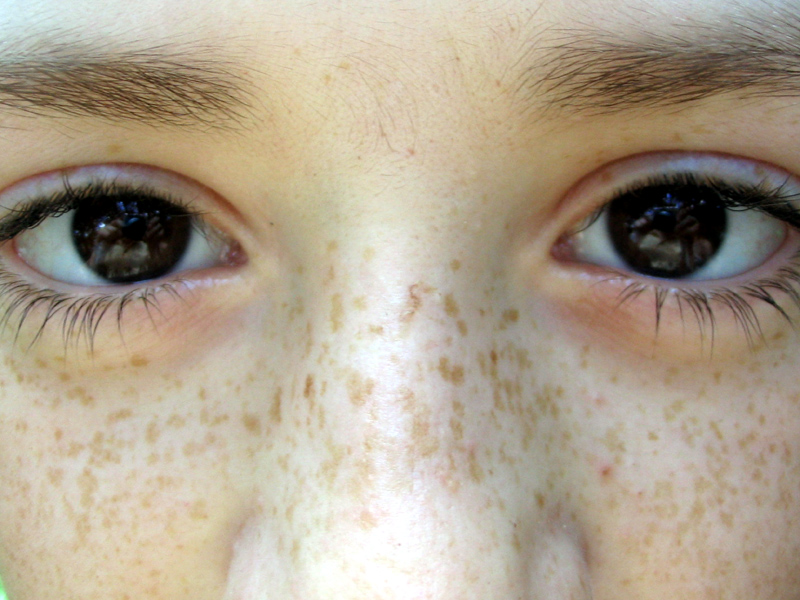
What the HECK is FRECKLE and how to differentiate fromLentigines

These are small pigmented spots on the skin with a clearly-defined edge, surrounded by normal-appearing skin. It is a harmless (benign) hyperplasia of melanocytes which is linear in its spread. is restricted to the cell layer directly above the basement membrane of the epidermis where melanocytes normally reside. 
This is in contrast to the "nests" of multi-layer melanocytes found in moles (melanocytic nevi). Because of this characteristic feature, the adjective "lentiginous" is used to describe other skin lesions that similarly proliferate linearly within the basal cell layer
The picture of lentigines below is from DERM ATLAS


Lentigines VS. Freckles:
Freckles have a relatively normal number of melanocytes but an increased amount of melanin. A lentigo has an increased number of melanocytes. Freckles will intensify and fade with sunlight exposure, whereas lentigines will stay stable in their color regardless of sunlight exposure
The pictures of Freckle below are from Wikipedia

Tuesday, February 21, 2012

Acanthosis nigricans

Darker, thick, velvety skin in body folds and creases. Rarely can cause itching


Commonest cause: Insulin Resistance (Insulin causes hyperplasia of the skin)
Internal Malignancies can cause this as well

Courtesy:

Avril Nimblett, MS, PA-C

 Acanthosis nigricans in children can be a precursor of type 2 diabetes


Image from Wikipedia

Monday, February 20, 2012

Anchovy sauce...

I know it is annoying to relate food to disease - but makes it easy remember and come with the correct diagnosis.
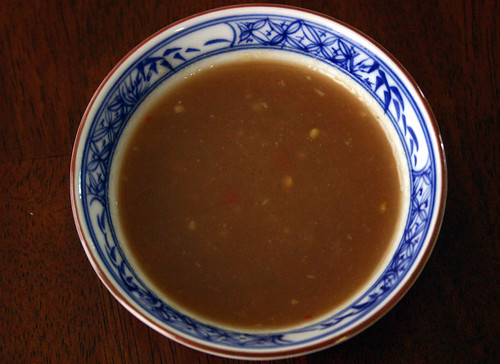
Anchovy sauce: Anchovies are a family of small, common salt-water  fish. Here you see Anchovy sauce in a bowl in the first picture. The picture underneath shows pus aspirated from a liver abscess confirmed to be due to entamoeba histolytica. 
Worldwide, Amoebic liver abscess is more common than pyogenic liver abscess.It is common in under developed countries. The disease is caused by ENTAMOEBA HISTOLYTICA. Infarction, enzymatic hydrolysis and immunological reaction either independently or in combination results in an abscess.The color has been described as “like anchovy sauce”. Anchovy sauce like pus is not always amoebic. It is not typical of amoebic liver abscess and has been over stressed in the past.The pus is usually chocolate colored or pinkish brown.
DIAGNOSTIC CRITERIA
1. History of residence in endemic area.
2. An enlarged tender liver in young male.
3. Response to metronidazole.
4. Leucocytosis
5. Elevation of right hemi diaphragm (radiology)
6. Scanning shows a filling defect.
7. A positive amoeba indirect haemagglutination test.

Source: AMOEBIC LIVER ABSCESS BY DR TAJUDDIN and wikipedia

Sunday, February 19, 2012

LINGUAL THYROID

The tongue is the most frequent ectopic location of the thyroid gland. Incidence of lingual thyroid varies between 1:3000 and 1:10,000.
Picture Courtesy: http://www.ghorayeb.com/LingualThyroid.html


In the first month of life the anlage of the thyroid gland descends from the posterior dorsal midline of the tongue to its final position in the lower neck. The initial site of descent eventually becomes the foramen caecum, located in the midline at the junction of the anterior (oral) tongue and the tongue base. 
If the embryonic gland does not descent normally, ectopic or residual thyroid tissue may be found between the foramen caecum and the epiglottis.
Rarely, parathyroid glands can be associated with the ectopic thyroid.  Many patients with lingual thyroid lack thyroid tissue in the neck.


Surgical excision or radioiodine therapy can be effective treatments for lingual thyroid, but no treatment should be attempted before radioisotope scan has confirmed that there is adequate thyroid tissue in the neck.  In those patients lacking thyroid tissue in the neck, the lingual thyroid could be excised and auto-transplanted in the neck region. 
Most cases require no treatment.
Keeping TSH and Free T4 in a good range will avoid undue enlargement which can sometime result in respiratory distress

Saturday, February 18, 2012

Hereditary angioedema (HAE)

Also known as Quincke's disease - An Autosomal Dominant disease
Caused by a deficiency or dysfunction of the C1 esterase inhibitor, a protein of the complement system


People with hereditary angioedema can develop rapid swelling of the hands, feet, limbs, face, intestinal tract, larynx or trachea
Attacks of swelling can become more severe in late childhood and adolescence.
There is usually a family history of the condition. However, relatives may be unaware of previous cases, which may have been reported as an unexpected, sudden, and premature death
Investigations:
  • C1 inhibitor function
  • C1 inhibitor level
  • Complement components C4 and C2
    Treatment:
    Antihistamines and other treatments used for angioedema are of limited benefit in hereditary angioedema. Epinephrine should be used in life-threatening reactions.
    The most effective treatment is a C1 inhibitor concentrate (not available in the US), but this may not be available. Fresh frozen plasma contains C1 inhibitor and will help an episode, but rarely, the swelling will become worse.
    Berinert P (CSL Behring), which is pasteurized C1 inhibitor, was approved by the F.D.A. in 2009 for acute attacks. Cinryze (ViroPharma), which is nanofiltered, was approved by the F.D.A. in 2008 for prophylaxis. Rhucin (Pharming) is a recombinant C1 inhibitor under development that does not carry the risk of infectious disease transmission due to human blood-borne pathogens.
    Newer treatments attack the contact cascade. Ecallantide (Kalbitor, Dyax) inhibits plasma kallikrein, and was approved by the F.D.A. (but not in Europe) for acute attacks in 2009. Icatibant (Firazyr, Jerini) inhibits the bradykinin B2 receptor, and was approved in Europe and approved by the FDA on August 25, 2011.

    Prophylaxis:
    Attenuated androgens, such as danazol, can reduce the frequency and severity of attacks by increasing the production of C1 inhibitor.
    Helicobacter pylori, a type of bacteria found in the stomach, can trigger abdominal attacks. Getting rid of the bacteria with antibiotic therapy decreases these abdominal attacks.
    Hereditary angioedema can be life threatening and treatment options are limited.
    Courtesywww.ncbi.nlm.nih.gov, youtube - HAE.org website and Wikipedia

Friday, February 17, 2012

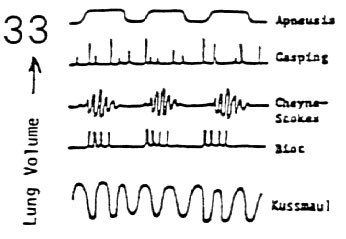
Kussmaul Breathing

Kussmaul breathing is a deep and labored breathing pattern often associated with severe metabolic acidosis, particularly diabetic ketoacidosis (DKA) but also renal failure. It is a form of hyperventilation, which is any breathing pattern that reduces carbon dioxide in the blood due to increased rate or depth of respiration. 

Kussmaul breathing is respiratory compensation for a metabolic acidosis, most commonly occurring in diabetics in diabetic ketoacidosis. Blood gases on a patient with Kussmaul breathing will show a low partial pressure of CO2 in conjunction with low bicarbonate because of a forced increased respiration (blowing off the carbon dioxide). Base excess is severely negative. The patient feels an urge to breathe deeply, an "air hunger", and it appears almost involuntary.
A metabolic acidosis soon produces hyperventilation, but at first it will tend to be rapid and relatively shallow. Kussmaul breathing develops as the acidosis grows more severe. Indeed, Kussmaul originally identified this type of breathing as a sign of coma and imminent death in diabetic patients.
Duration of fasting, presence or absence of hepatomegaly and Kussmaul breathing provide clues to the differential diagnosis of hyperglycemia in the inborn errors of metabolism
Content courtesy: Wikipedia, Patterns of breathing: Loyola University Medical Education Network. Video from Youtube

Wednesday, February 15, 2012

Café au lait spots

Café au lait (French pronunciation: [kafe o lɛ] "coffee with milk") is a French coffee drink. 
Are so called because the spots are light brown in color ( like coffee with milk)
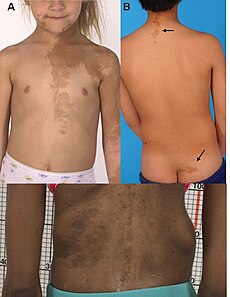
They are pigmented birthmarks.  The spots of neurofibromatosis,  have a smooth border resembling the "coast of California"


Having six or more café au lait spots greater than 5 mm in diameter before puberty, or greater than 15 mm in diameter after puberty, is a diagnostic feature of neurofibromatosis type I, but other features are required to diagnose NF-1. The incidence of single lesions is high and of no significance - a patient is allowed up to four patches of less than 0.5cm diameter, but no patches greater than 1.5cm diameter.


Café au lait spots: In McCune-Albright's syndrome WILL NOT CROSS THE MIDLINE has a irregular border compared to "Coast of Maine"The patches are usually large, and have irregular borders resembling the "coast of Maine". .
Typical lesions that are often found on the nape of the neck and crease of the buttocks are shown (arrows).
Picture Courtesy: Wikkipedia

Tuesday, February 14, 2012

Thyroid Antibodies


Thyroid peroxidase or thyroperoxidase (TPO) is an enzyme expressed mainly in the thyroid that liberates iodine for addition onto tyrosine residues on thyroglobulin for the production of thyroxine (T4) ortriiodothyronine (T3), thyroid hormones. In humans, thyroperoxidase is encoded by the TPO gene.
Thyroid peroxidase is a frequent epitope of autoantibodies in autoimmune thyroid disease, with such antibodies being called anti-thyroid peroxidase antibodies (anti-TPO antibodies).


THYROID ANTIBODYACRONYMPRESENT INWHEN ORDEREDOTHER FACTS
Thyroid peroxidase antibodyTPOAbHashimoto thyroiditis;Graves diseaseWhen patient has symptoms suggesting hypothyroidism; when considering starting a patient on a drug therapy that has associated risks of developing hypothyroidism when thyroid peroxidase antibodies are present, such as lithium, amiodarone, interferon alpha, or interleukin-2Has been associated with reproductive difficulties, such as miscarriage,preeclampsia, premature delivery, and in-vitro fertilization failure
Thyroglobulin antibodyTgAbThyroid cancer; Hashimoto thyroiditisWhenever a thyroglobulin test is performed to see if the antibody is present and likely to be interfering with the test results; since the thyroglobulin test will be ordered at regular intervals after thyroid cancer treatment, thyroglobulin antibody will also be ordered at regular intervals 
Thyroid stimulating hormone receptor antibodyTRAbGraves diseaseWhen patient has symptoms of hyperthyroidism; to monitor effectiveness of anti-thyroid therapy